Pages

Showing posts with label Mayan ruins. Show all posts

Friday, August 16, 2013

Tihosuco, Quintana Roo: Church-Ruin of the Divine Child (with video)

Contemporary Mayan religion is poorly understood by most outsiders.  This was the case in a recent article in the NY Times about a new Mayan-language soap opera being filmed in the Quintana Roo town of Tihosuco.   In it the writer referred to the town's colonial era church as the ruins of a temple.  Although it is easy to see how the writer could have made this assumption, more research on his part would have been helpful.

Church of the Divine Child,  Tihosuco

The building he referenced is a ruin and in a way a Mayan ruin but not that of a temple. It is  the seeming ruin of the Church of the Divine Child and its former convent.  Completed in 1839, it had been the Franciscan center of the conversion effort in the region.  Less than ten years after its completion, it was destroyed at the start of the Caste War of the Yucatan (1847-1901) the long-lasting conflict between the Mayan insurgents and the government, those of Spanish descent.

However, walk into this building and you will soon see that it is not really a ruin; its interior catches you off guard.   Much of it  has been unexpectedly well-restored and the birds flying around the interior add a unique effect.  The video I shot in the church  shows this and shares the experience.  Here is the link to this video: https://www.youtube.com/watch?v=HayiDi27ufs

At the main altar, above the large crucifix, there is a small statue of the Divine Child whose church this is.  The statue on the altar's right is Mary and the other is of San Jose (St. Joseph) Jesus' father holding the Divine Child.  The interior restoration of the building is amazing, resulting, in my opinion, in one of the most striking churches in Mexico.  


Church of the Divine Child, Tihosuco, Quintana Roo, MX


Tihosuco, view from interior


This church has magnificent murals  covering the walls of two sizable side chapels which are vibrant being recently painted by local Mayan artists; they are unmistakbly "folk art".  The signature on the murals indicates that they were painted by local artists named Max and Alberto in 2009.


Tihosuco, mural artists' signatures


The paintings are vibrant and can hold their own with the best art of their kind any where in Mexico. The Church is dedicated to the Divine Child, Jesus, and one of the mural-filled side chapels is dedicated to him, but there is an  equally significant chapel dedicated to  his mother Mary, in her advocation (form) of the Virgin of Guadalupe.  

These murals from the chapel of the Divine Child show scenes from the life of Jesus from the time of his birth up to his resurrection.  


Tihosuco, shepherds and angels at birth of Divine Child

Tihosuco, statue of the Divine Child


Tihosuco, Jesus resurrected

Here are the murals in the chapel of Guadalupe/Mary.  


Tihosuco, chapel of Guadalupe
Tihosuco mural detail showing Assumption of Mary (into Heaven)


Tihosuco, Altar of Guadalupe


Tihosuco, detail of Guadalupe mural

The sides of the church which were not seriously damaged in fighting show features of 
Mexico's "fortress monasteries", in the crenellations visible on the top.


Tihosuco, exterior wall detail


Tihosuco, profile of Church of the Divine Child

It is important to realize that the Church of the Divine Child in Tihosuco is a Mayan church attended by Mayan parishioners and that they were the ones who gave life to this ruin through the beautiful murals on its walls.  It is important for the reading public to have a fuller and more realistic appraisal of modern Mayan life as it is lived in the Yucatan, Quintana Roo and elsewhere.  Understanding that the religion there is not all about ancient Mayan ruins and temples is part of this.   Despite the colonial history of forced conversion the people there have developed a  attachment to Christianity, on their own terms with their own twists and understandings, as is the case throughout Mexico and the Latin American world.  


Tuesday, July 2, 2013

Tihosuco, San Martiniano: The "Other" Mayan Ruins

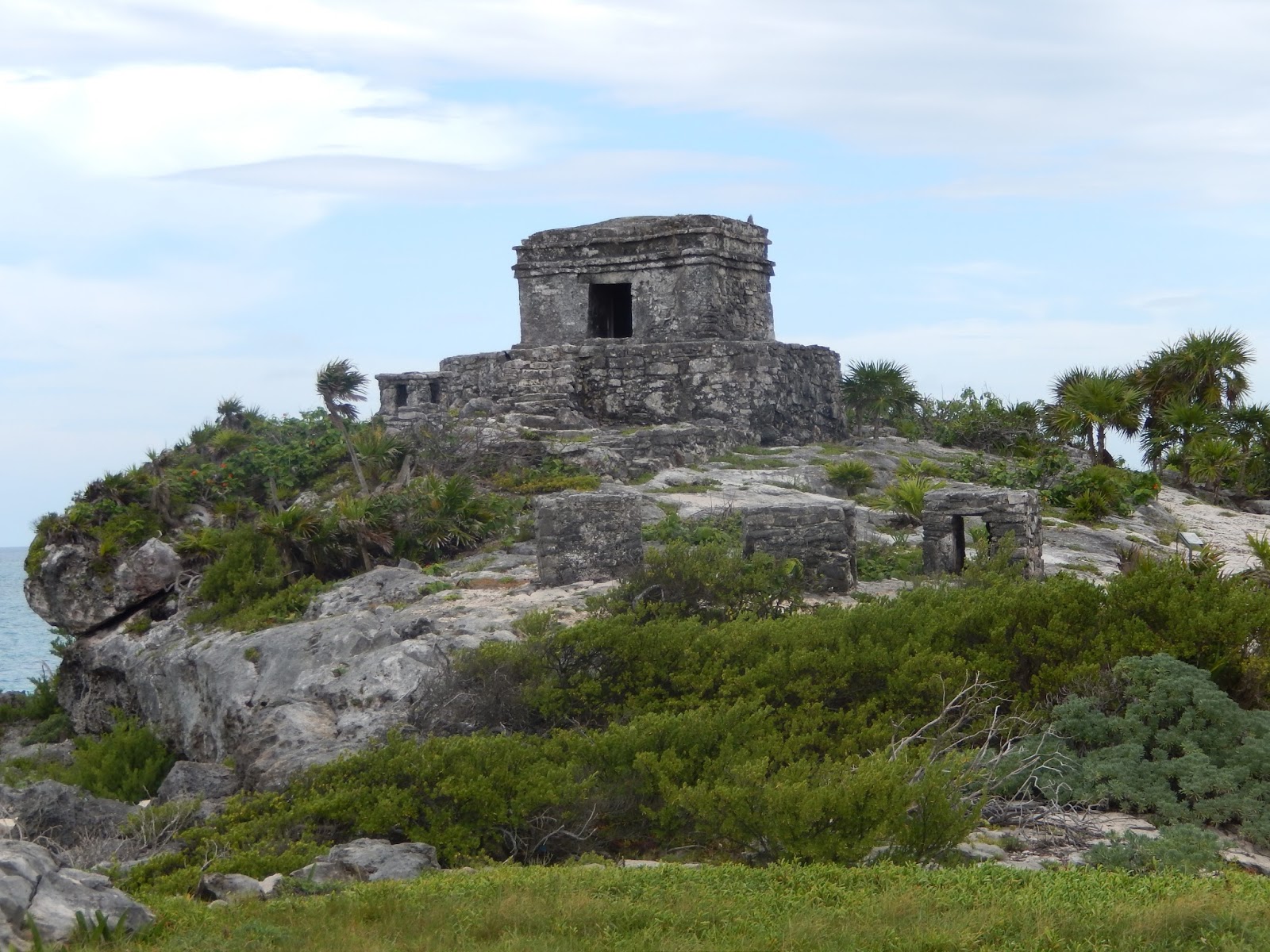
Like the rest of Mexico the state of Quintana Roo, located in the eastern portion of the Yucatan Peninsula and bordered by the Caribbean Sea, is known for its ruins.  The ruins of Tulum,  which in its time was the main port for the inland Mayan city of Coba, are always full of tourists from all over the globe.   With its location alongside the turquoise blue waters of the Caribbean Tulum, historic value apart, is flat-out beautiful.  Coba, located further inland, is a very different sort of site. It is an extensive ruin that is well-visited, as are all the Mayan ruins in Quintana Roo and the rest of the Yucatan.  


Tulum, Quintana Roo, MX

Tulum, Quintana Roo, MX

Coba, Quintana Roo, MX

Coba, Quintana Roo, MX


Then, there are the "other" Mayan ruins, products of a different time in Yucatan history, but equally interesting and equally important.  A major event in the history of the Yucatan was the Caste War, Guerra de las Castas,  which started in the mid-nineteenth century but was not really finished until  the early 20th century.  It began as a Mayan uprising against the Spanish overlords and ultimately resulted  in the independent state of Quintana Roo in 1974.


Tihosuco, Quintana Roo, MX
From the outside the Church of the Divine Child in Tihosuco looks abandoned but, in fact, the interior has been partially reconstructed and it is in use as a church.  Prior to the Caste War, there had been some deterioration in the building, but during this war the church was intentionally destroyed by the uprising Mayans. Fortunately not all of the gunpowder in the keg that was meant to level the church exploded and the church was not totally demolished.

There is little information about the destruction of the old Guadalupe church in San Martiniano which is in a small pueblo not far from Puerto Morelos. I have been told that the church fell apart due to neglect over the years and now the ruins, apart from the facade seen below,  are being torn down to construct a new church that is a reproduction of the original one.


 San Martiniano, Quintana Roo, MX


 San Martiniano, Quintana Roo, MX

At the present time the church in Tihosuco as well as the one in San Martiniano  are functioning as churches  with active congregations.  Each will be explored in-depth in a coming post, but here are a few photos of their interiors.

Interior of San Martiniano church ruin


Interior of Tihosuco church ruin
Neither of these church ruins has the antiquity of Tulum, Coba or the other Mayan ruins, but they both are Mayan ruins of a different sort.  The histories that led to them are fascinating and complex and no less a part of the formation of the contemporary Mayan people of Quintana Roo than the pre-Hispanic period.